So the little orange engine light has just popped up on your dash, and now you're wondering what the check engine light means.
In short, your car's computer has noticed something isn't right and logged a fault.
The first thing to check is simple: is the light steady or is it flashing? That one detail tells you how urgent it is.
This is general information, not a diagnosis. Every car is different, so get a qualified mechanic to check yours.
What Does the Check Engine Light Mean?
The check engine light means your car's engine computer has spotted a reading outside the normal range and stored a fault code.
What the light actually tells you
Your car has a small computer called the ECU (engine control unit). It keeps an eye on sensors all through the engine, fuel and exhaust systems. When one of those readings goes out of whack, the ECU saves a fault code and switches on the light.
You'll usually see it as an orange or yellow engine-shaped symbol. Your owner's manual might call it the "malfunction indicator lamp", so don't be thrown if you spot that name. Same light.
The light itself can't tell you what's wrong, though. The stored code is where the detective work starts, and that needs a scan tool.
Steady, flashing or red: what each one means
Here's the quick version:
| What you see | What it usually means | What to do |
| Steady orange | A fault has been logged | Usually not urgent, but book a check soon |
| Flashing orange | Can point to an active engine misfire | Ease off, stop somewhere safe and get help |
| Red warning light | Usually something serious, like low oil pressure or overheating | Stop safely, switch off the engine and call for help |
Why does flashing matter so much? According to Nissan's check engine light guide, a blinking light can mean the car has detected a misfire, and a misfire can damage the emission control system, including the catalytic converter. When fuel doesn't burn properly in the engine, the unburnt fuel can end up in the exhaust and overheat the converter. That's an expensive part you really don't want to cook.
A red oil pressure or temperature light is a separate warning from the check engine light, but the advice is the same: stop safely. Want to get to know the rest of your dash? Our DIY car maintenance guide has a handy colour-by-colour breakdown of dashboard warning lights.
Can You Keep Driving With the Check Engine Light On?
Often yes, for a short while, but only if the light is steady and the car drives normally. If it's flashing, or you can hear or smell something strange, it's time to stop.
When it's usually fine to keep driving
Is the light steady? Does the car drive, sound and smell the same as always? Then it's usually okay to get yourself to a workshop. RACV's dashboard warning light guide backs this up, noting that a car with a steady light may still be fine to drive but should be checked as soon as you can.
Just try not to leave it in the "deal with it later" pile for weeks. From our mechanics' experience, small faults have a habit of turning into bigger and pricier ones when they're left alone. A sensor problem today could mean a damaged part down the track.
When to pull over
Pull over somewhere safe, switch off and call roadside assistance if you notice:
● a flashing check engine light, especially with shaking, misfiring or a loss of power
● any red warning light
● a burning smell or smoke
● the temperature gauge climbing towards hot
Stopping early might feel like a hassle, but it can save you a much bigger bill.
Will a check engine light fail a roadworthy?
Victoria's VSI 26 roadworthiness requirements say the check engine lamp may be on if it can be shown the fault code doesn't put the car into limp mode, affect a safety system or affect how the emissions system works.
So in Victoria, the light alone isn't an automatic fail, but the fault behind it can be.
Other warning lights are treated more strictly. Under VSI 26, all mandatory warning lights, including the airbag light where fitted, must work properly. And if your car came with ABS or stability control (ESC) as standard, a warning light for either system counts as a fault.
Keep in mind that's Victoria's rule. Other states and territories run their own inspections (like the NSW pink slip or the Queensland safety certificate) with their own rules, so ask your local transport authority or an inspection station. For the bigger picture, see our guide on what can fail a car inspection.
Why Is the Check Engine Light On?

What to Do When the Check Engine Light Comes On
Here's a simple game plan you can follow, even if you don't know a spark plug from a spanner.
1. Check the light and how the car feels
First, is the light steady or flashing? Then think about how the car feels. Is it shaking, making new noises or smelling odd? If the light is flashing or something feels off, go back to the pull-over advice above and stop safely.
2. Tighten the fuel cap
Once you're parked somewhere safe, check the fuel cap is on and click tight. If that was the culprit, the light may take a few drives to switch itself off, so don't panic if it doesn't vanish straight away.
3. Go easy on the engine
Until the car has been checked, be gentle with it. Skip hard acceleration, towing and long highway runs. Keep your trips short, and make the next one a trip to a workshop.
4. Get the codes read

A workshop can plug a scanner into your car's OBD-II port. That's the diagnostic socket, usually tucked under the dash on the driver's side. The scanner pulls out the stored fault code.
The code is only a starting point, though. For example, P0301 points to a misfire in cylinder 1, but not why it's misfiring. Is it the spark plug? The coil? Something else? That's what the mechanic works out next.
Ask for the fault code and the recommended fix in writing before you agree to any repairs. A good workshop will happily explain both.
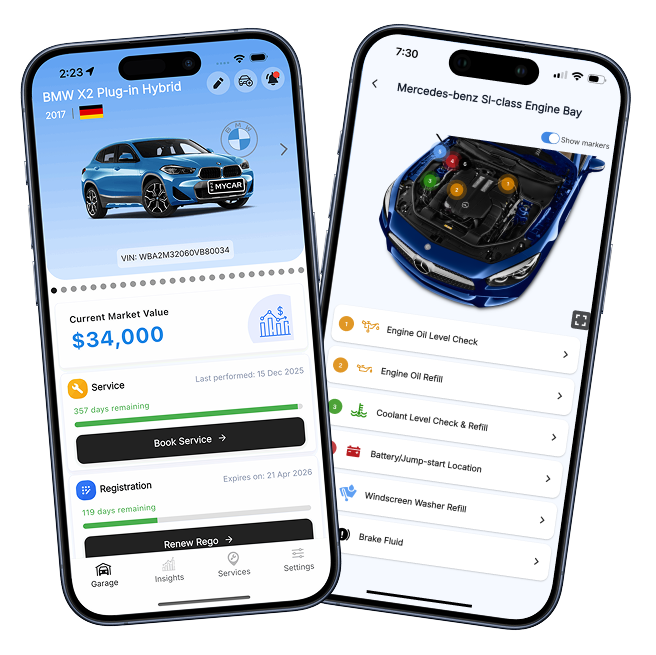
If your workshop uses Autoport, it can send a digital inspection report straight to your app, with photos, recommendations and a quote when it provides one.
How Much Does It Cost to Find Out What's Wrong?

The honest answer: finding out usually costs a modest fee, but the repair itself can't be priced until someone knows what's actually wrong.
Our guide to diagnostic and assessment fees explains what you're usually paying for. Prices vary from workshop to workshop, so it's always worth asking, including whether the fee comes off the bill if you go ahead with the repair.
It also helps to know the difference between a quick code read and a full diagnosis. A code read just pulls the fault code out. A full diagnosis is the mechanic testing parts to find out why that code appeared. Before you book, ask what's included.
Once you know what's wrong, the Service Price Guide in the Autoport app can give you a rough idea of what common repairs cost, based on your vehicle category.
Check Engine Light FAQs
Is it okay to drive with the check engine light on?
Usually, for a short trip, if the light is steady and the car drives normally. Not if it's flashing or the car feels wrong.
What is the most common reason for a check engine light?
There's no single reason. A loose fuel cap, a worn oxygen sensor, and spark plugs or ignition coils are among the usual suspects. Only a scan can tell you which one is behind your light.
How do you fix a check engine light?
You fix the fault, not the light. Get the codes read, then repair whatever the diagnosis points to. Clearing the light, or disconnecting the battery to reset it, doesn't fix anything. The fault is still there and the light will usually come back. Check out the step-by-step section above.
What does an orange engine light mean?
It means a fault has been logged. If it's steady, it's usually not urgent, but get it checked soon. If it's flashing, treat it as urgent. The colour table near the top has the quick version.
How much does it cost to fix a check engine light?
It depends on the fault. A diagnostic scan has a fee, but the repair can't be priced from the light alone. Jump back to the cost section for the details.
Why is the check engine light on when the car seems fine?
Lots of faults, like sensor problems, don't change how the car drives at first. That's why it's easy to ignore. The car still needs checking, though, before a small problem grows into a big one.
Why does the check engine light come on and then go off?
Some faults are intermittent. They trigger the light, then clear when conditions change, like the engine warming up. A workshop may still be able to read the stored code, so mention it at your next visit, especially if the light keeps coming back.
The Bottom Line
The check engine light is your car's way of saying it has logged a fault. A steady light means get it checked soon, while a flashing light means stop somewhere safe. Either way, the fault code, not the light, tells you what's really going on.
And it's a lot less stressful when you already know what your dash is trying to say.
The free Autoport app has a Car Guide that explains common dashboard warning lights, plus service reminders and a Virtual Garage that keeps your car's details, documents and receipts in one place.
When it's time for a check-up, you can browse its directory of automotive businesses too. Download Autoport free on the App Store or Google Play.