Got an inspection coming up and a nagging feeling about that tyre, and you wonder what can fail a car inspection? Most of the time, it's worn tyres, tired brakes, a cracked windscreen, worn steering or suspension parts, fluid leaks and rust.
Quick heads up before we dive in: in Australia, it goes by different names depending on where you live. It's a roadworthy certificate in Victoria, a safety certificate in Queensland and a safety check (the good old pink slip) in NSW.
Today, we'll cover all of them.
This is general information only. Every car is different, so check your owner's manual or chat with a qualified mechanic about yours.
What Counts as a Car Inspection in Australia?
Let's untangle the names first, because this is where a lot of people get stuck.
Roadworthy, safety certificate or pink slip?
They're all basically the same thing: a check that your car is safe enough to be on the road. Here's when you'll usually need one:
- NSW (safety check or pink slip): most light vehicles more than 5 years old need one every year to renew rego.
- Victoria (roadworthy certificate): when you're selling a car, re-registering it or clearing some defect notices.
- Queensland (safety certificate): before you sell a registered vehicle, or when you're registering one that's been off the road.
- ACT: usually when you're transferring rego on a vehicle over 6 years old.
- WA, SA, Tasmania and the NT: mostly for things like re-registering, interstate transfers, written-off vehicles or defect notices. The federal Rules for Vehicle Standards in Australia summary is a handy place to compare them, then check your own state's transport site.
How is it different from a pre-purchase inspection or a service?
A roadworthy only checks safety items. It's not a check of how reliable the car is or what general shape it's in.
So what isn't checked? In Victoria, things like the air-con, electric windows and rear wipers don't need to work to pass.
Meanwhile, a pre-purchase is a much wider check you'd book when you're buying a used car and want to know what you're really getting.
10 Most Common Things That Fail a Car Inspection
For each one, we'll cover what the inspector looks at, what tips it into a fail and the quick fix.
1. Worn or damaged tyres
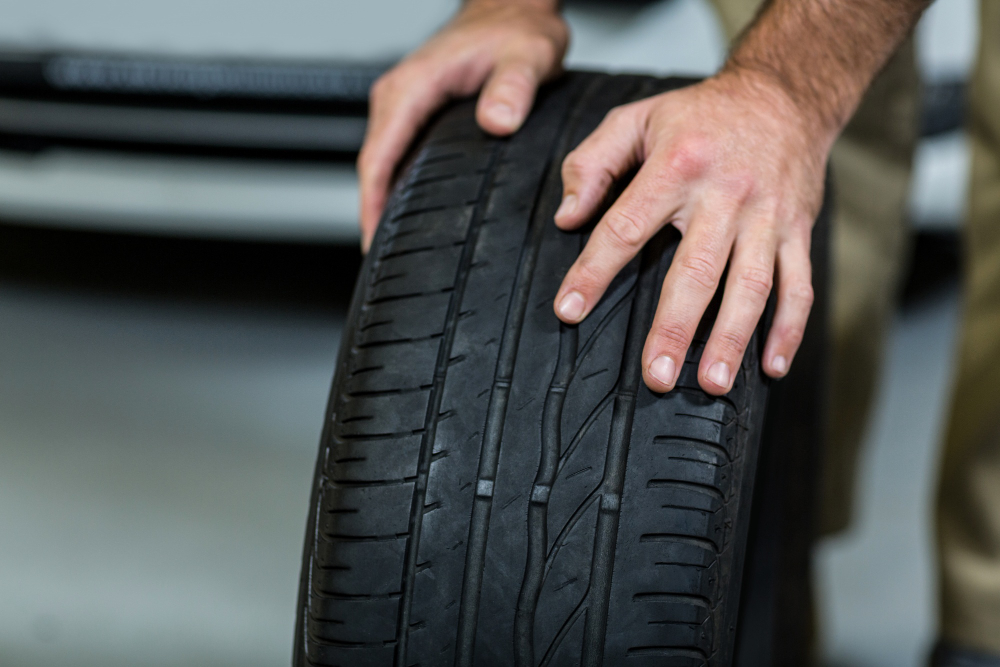
Luckily, tyres are the easiest to check yourself. The legal minimum is 1.5mm of tread in the principal grooves, which are the wide grooves running around the middle of the tyre.
Not sure how to measure that? Look for the little raised bars sitting inside those grooves. They're called tread wear indicators. If the tread has worn down level with them, so they'd touch the road, the tyre fails.
Additionally, deep cuts, cracks or bulges in the sidewall can fail a tyre too.
From our mechanics' experience, don't wait until you're scraping 1.5mm. Grip in the wet drops off well before then, so it's worth budgeting for new tyres a fair bit earlier.
2. Worn brakes
Inspectors look at the pads, the discs (rotors) and how well the car actually pulls up.
How do you know if yours are on the way out? Grinding or squealing, a pulsing pedal, a shaky steering wheel when you brake, or the car pulling to one side are all signs it's time for a mechanic to take a look.
3. Faulty lights and indicators
Headlights, brake lights, indicators, parking lights and the number plate light all need to work.
Good news that this is usually the cheapest fail on the whole list. Grab a mate, have them stand behind the car while you hit the brakes and flick the indicators, and you'll catch most problems in two minutes.
4. Cracked or damaged windscreen
A small chip on the passenger side? Probably fine. A crack creeping across your line of sight? That's a different story. Victoria's rules are quite specific here.
In the area the wipers sweep, a laminated windscreen can fail with a chip or star bigger than 16mm across, a crack longer than 150mm, or any crack that goes through more than one layer of glass.
Wipers and washers get checked too. If your blades smear and the washer jets point at the sky, sort them out before you go in.
5. Seatbelts and seats
Every seatbelt has to latch, retract properly and be free of cuts, fraying or knots. Seats need to be secure, with no broken frames or sharp bits poking out.
Here's a simple test you can do right now: give each belt a sharp tug and it should lock straight away. Then, let it go and check it winds itself back in smoothly.
6. Steering and suspension problems
Inspectors check things like suspension bushes, shock absorbers, springs, ball joints and tie rod ends. They're looking for play beyond the manufacturer's limits, damage, or shocks that are leaking.
You can't see most of this without getting under the car, but your car often drops hints.
Does it pull to one side? Clunk over speed bumps? Feel loose or vague when you steer? Is one corner sitting lower than the others? If you said yes to any of these, get it checked first.
7. Fluid leaks

Victoria's standard says leaks that would drip onto the road while the car is parked or idling are unacceptable. Note that water dripping from the air-con doesn't count.
Have a peek at your driveway or garage floor, things like oil, coolant, power steering or brake fluid spots are your red flag.
Exactly how a small seep is treated comes down to the inspector, so it's smart to get any leak looked at before you book.
8. Rust and body or chassis damage
The inspection cares about structural safety, so it can be rust or damage in the parts that hold the car together that can fail it. Think rust holes in the floor, sills or chassis rails, or dodgy repairs after an accident.
Doors, the bonnet and the boot also need to latch properly, so if your boot only stays shut with a bit of rope, that'll need fixing.
9. Dashboard warning lights
In Victoria, all mandatory warning lights, including the airbag light where fitted, must work properly. An airbag (SRS) light that's stuck on or ABS or stability control warning lights showing a fault, can fail the car.
What about the check engine light? Surprisingly, it isn't an automatic fail in Victoria. It can stay on if the fault doesn't put the car into limp mode or affect a safety system or the emissions system.
Other states may treat it differently, though. Our advice is that you get the fault code read before you book, so there are no surprises.
10. Modifications and window tint
Lowered suspension, big wheels, extra lights and dark tint can all cause headaches. Some modifications need approval or certification, and the rules differ from state to state.
We won't quote tint percentages here because they vary. In Victoria, check VSI 26 and the window tinting rules it points to.
Do the Rules Change From State to State?
Yes they do and below is a quick state comparison
| State | What it's called | When you usually need it | How long it lasts | Time to fix a fail |
|---|---|---|---|---|
| NSW | Safety check (pink slip) | Most light vehicles over 5 years old, every year at rego renewal | Must be used to renew rego within 6 months | 14 days for a free recheck at the same station (NSW Government) |
| Victoria | Roadworthy certificate | Selling, re-registering or clearing some defect notices | 30 days | 14 days, then you pay for a new test (Transport Victoria) |
| Queensland | Safety certificate | Before selling a registered vehicle, or re-registering one | 2 months or 2,000km for private sales (Queensland Government) | 14 days for a reinspection, otherwise a new inspection (TMR) |
| ACT | Roadworthy inspection | Transferring rego on a vehicle over 6 years old, and some other cases | Check Access Canberra | Check Access Canberra |
| NT | Roadworthy inspection | Set situations, such as transfers and first-time NT rego | Check NT.gov.au | Get it fixed and re-checked. No fee for a failed inspection at a government vehicle inspection facility (NT.gov.au) |
| WA, SA, Tasmania | Vehicle inspection or roadworthy | Mostly re-registering, interstate transfers, written-off vehicles or defect notices | Check your state transport site | Check your state transport site |
One tip from us: be a bit wary of validity periods you read on random workshop sites. We've seen pages still saying a NSW pink slip lasts 42 days, when the NSW Government says 6 months.
What Happens If Your Car Fails?
Failing an inspection happens to loads of people and it's usually fixable. Here's what comes next.
What you get after a fail
You'll get a written list of what needs fixing. In NSW, the station gives you a repairs needed report (it used to be called a white slip). In Victoria, the tester gives you a report that spells out the problems. Either way, hang on to it. It's basically your to-do list.
How long you have to fix it
In NSW, Victoria and Queensland, you've got 14 days to get the repairs done and the car rechecked. Other states have their own timeframes, so check the table above and your state's page.
Do you have to pay again?
It depends on where you are and how quickly you get it sorted:
- NSW: no extra inspection fee if you fix it within 14 days and go back to the same station. Leave it longer and you pay again.
- Victoria: go past 14 days and you'll pay for a new test.
- NT: there's no fee for a failed inspection at a government vehicle inspection facility.
Handy tip: ask about the re-inspection fee before you book, not after. And when the repair quote lands, don't just nod along. Our guide to what car maintenance charges actually cover can help you make sense of it.
How to Check Your Car Before an Inspection
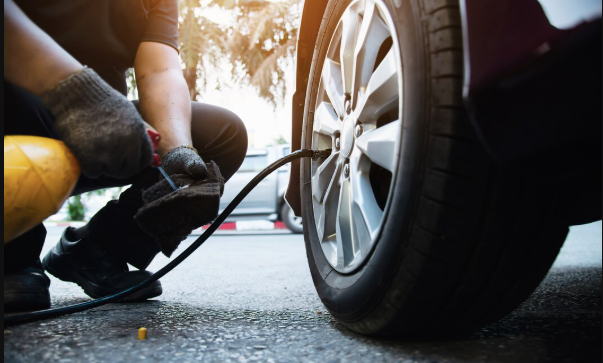
Want to dodge most fails before they happen? Here's a 10 minute routine you can do in the driveway.
- Tyres. Check the tread against those wear indicators, look for cuts and bulges on the sidewalls, and check the pressure while you're at it. Our basic DIY car maintenance checks walk you through it.
- Lights. Get your helper behind the car. Test headlights on low and high beam, brake lights, indicators, reverse lights and the number plate light.
- Wipers and washers. Spray the screen and run the wipers. Streaks, smears or split rubber mean it's time for new blades.
- Seatbelts. Pull each one sharply to make sure it locks, let it wind back in, and look for fraying.
- Driveway. Look under where the car's been parked. Fresh drips? Note the colour and get it checked.
- Dashboard. Start the car and watch the warning lights. They should go out shortly after starting. If one stays on, get it looked at before you book.
- Car been sitting still for a while? Do a full walk-around first. Flat batteries, flat spots on tyres, rusty brake discs and even chewed wiring are common if your car has been sitting unused.
- Service due? Get it done before the inspection. A service already covers a lot of the same ground, like brakes, tyres, lights and fluids. Here's what a car service includes.
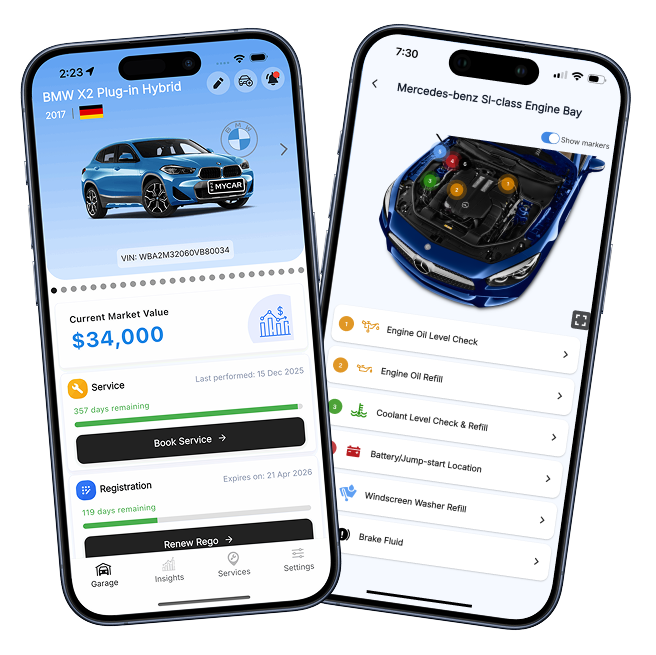
And if dates have a habit of sneaking up on you, the Autoport app can remind you before your rego and service are due.
FAQs
Does a check engine light fail a roadworthy or pink slip?
Not automatically, at least in Victoria. The light can stay on if the fault doesn't put the car into limp mode or affect a safety system or emissions. Other states may differ, so get the fault code read before you book.
Can a cracked windscreen fail an inspection?
Yes, it can. In Victoria, a laminated windscreen can fail if, within the wiper area, it has a chip over 16mm, a crack over 150mm, or a crack through more than one layer of glass.
How much tread do tyres need to pass?
At least 1.5mm in the principal grooves, and the tread wear indicators can't be touching the road. That's the legal minimum, though, not the safe target.
How long do I have to fix a failed inspection?
It depends on your state. NSW, Victoria and Queensland all give you 14 days for a recheck. Check the state table above for the details..
Is a roadworthy the same as a pre-purchase inspection?
No. A roadworthy only covers safety items. A pre-purchase inspection is a wider check that a buyer books to understand the car's overall condition.
Do I need a pink slip every year in NSW?
If your car is a light vehicle more than 5 years old, usually yes. You need a yearly safety check to renew rego, and you have to use the report within 6 months. Not sure? Your rego renewal notice will tell you whether an inspection is needed.
Conclusion
Here's the thing to remember: an inspection only checks the safety basics. And most failures come down to small, fixable stuff like tyres, bulbs and wiper blades.
The easiest way to pass the first time? Keep up with your servicing. If you're not sure how often that should be, here's how often you should service your car.
Stay ahead of your next inspection. The Autoport app keeps your service history in one place, reminds you before rego and service dates are due, and helps you find a workshop when something needs fixing.
Download it free on the Apple App Store or Google Play Store.